Web search for AI agents after Bing: what options are left in 2026?
Bing Search APIs retired in August 2025 and Google Custom Search is closed to new customers. Four kinds of search backend remain for agents.
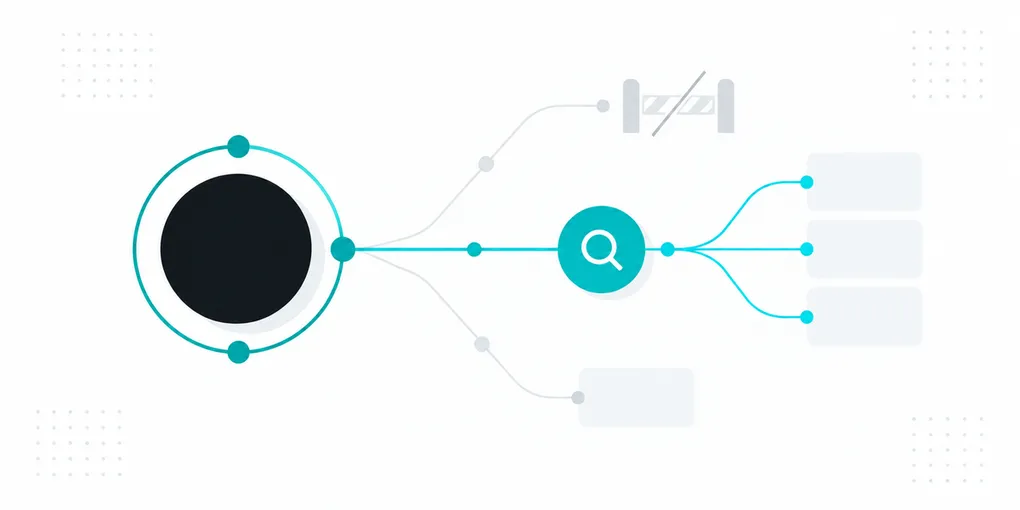
For years the default answer to “how does my agent search the web” was a Bing key. That answer is gone, and the obvious second choice from Google is closing too. What is left is a set of backends that differ in who decides how many searches run, whose index answers, and how the bill arrives.
What happened to the Bing Search API?
Microsoft’s lifecycle page states that “Bing Search APIs will be retired on August 11, 2025,” that existing instances “will be decommissioned completely,” and that the product is no longer available for new signups (checked 19 October 2026 on learn.microsoft.com).
The suggested migration is Grounding with Bing Search as part of Azure AI Agents. That is a different shape of product: instead of your code calling a search endpoint and getting JSON back, an Azure-hosted agent incorporates web data while the model generates its answer. If you built your own agent loop on another model or framework, there is no raw-results endpoint to swap in.
Is Google Custom Search still an option?
Only if you already have it. As of 19 October 2026 the Custom Search JSON API overview says the API is “closed to new customers” and that “existing Custom Search JSON API customers have until January 1, 2027 to transition to an alternative solution.” Its pricing (100 free queries a day, then $5 per 1,000, up to 10,000 a day) applies only to those existing customers.
We compared Custom Search with SERP APIs in detail in Google’s official Search API vs SERP APIs, so we will not repeat it here. For a new agent project, the practical point is that neither of the two official search APIs is open to you.
What kinds of search backend remain for an agent?
1. The model provider’s built-in search tool. You add a tool to the model call and the provider runs the searches. Anthropic’s web search tool costs “$10 per 1,000 searches, plus standard token costs for search-generated content,” and a max_uses parameter caps searches per request (Anthropic docs). OpenAI lists web search at “$10.00 / 1k calls + Search content tokens billed at model rates,” with the preview tool on non-reasoning models at $25.00 per 1,000 (OpenAI pricing). Both checked 19 October 2026. The model decides when to search, and the cost lands inside the model bill, results counted as input tokens.
2. SERP APIs. Your code sends a query and gets the Google results page back as JSON: organic results, related searches, sometimes People Also Ask. You choose every query, and the results are what Google itself returned.
3. AI-native search indexes. Companies that crawl and index the web themselves and return results shaped for LLMs, often with page text or extracted passages attached. You get one call that does more, ranked by their index rather than Google’s.
4. MCP servers that bundle search with page reading. Any of the above, exposed as MCP tools, so an agent in Claude, Cursor or your own client can search and then open the pages it picked, without you writing glue code.
How do the options compare?
| Built-in model tool | SERP API | AI-native index | Search + read MCP | |
|---|---|---|---|---|
| Who picks the number of queries | The model, capped by max_uses |
Your code | Your code | The agent, per tool call |
| Index | Provider’s choice | Google results | Their own index | Depends on the server |
| Cost predictability | Per search plus result tokens | Fixed price per call | Fixed per call, varies by depth | Fixed per call |
| Can read full pages too | Separate fetch tool | Usually a separate product | Often included | Yes, by design |
| Payment model | Your model API account | Key, often prepaid or monthly | Key, usually monthly | Same as the server’s API |
The row that matters most for agents is the first one. With a built-in tool, a hard question can turn into ten searches inside one request, each bringing its results into context. With an API you call yourself, every search is a line of your own code and a fixed price, which is what makes a hard spending cap possible.
Where does FastAF fit?
FastAF is in categories 2 and 4. /v1/serp returns Google results for 5 credits, which is $1.33 to $2.50 per 1,000 searches depending on the pack, with credits valid 12 months and no subscription. The same key covers Google News, Google Scholar and Google AI Mode, and reads pages through /v1/scrape at 1 credit. We are not an AI-native index: the results are Google’s.
Here is the loop most agents need, search then read, run on 19 October 2026:
import os, time, requests

API = "https://api.fastaf.co/v1"
HEADERS = {"Authorization": f"Bearer {os.environ['FASTAF_API_KEY']}"}

def call(endpoint, **params):
    t = time.time()
    r = requests.get(f"{API}/{endpoint}", params=params, headers=HEADERS, timeout=120)
    r.raise_for_status()
    print(f"{endpoint}: {r.headers['X-FastAF-Credits-Used']} credits, {time.time() - t:.1f}s")
    return r

# 1. Search Google, keep what the model needs to pick a link
hits = call("serp", query="bing search api retirement", country="us").json()["organic_results"]
for h in hits[:5]:
    print(h["rank"], h["title"], h["link"])

# 2. Read the page the model picked, with the same key
page = call("scrape", url=hits[0]["link"]).text
print(len(page), "characters of page")
The search took 4.5 seconds and 5 credits; the top result was Microsoft’s own retirement notice. Reading it took 0.7 seconds, 1 credit, and returned 47,352 characters.
Three more calls the same day, each charged as listed:
- serp for “bing search api retirement alternatives”: 10 organic results (title, link, snippet, rank) and 8 related searches, 5 credits, 3.3 s.
- news for “AI agents web search”: 10 articles with source, relative date (“1 day ago”) and URL, 5 credits, 8.1 s.
- ai (Google AI Mode) for “what replaced the bing search api for ai agents”: 7 text blocks with inline citations, 4 references, and a 3,772-character markdown answer, 10 credits, 4.8 s.
For agents in an MCP client, the hosted MCP server exposes the same calls as 15 tools, including search_web, search_news, ask_google_ai and scrape_page, and every tool result reports credits used and remaining. For agents with no account at all, x402 charges per call in USDC on Base, $0.005 per search, settled only when the call succeeds. Latency across endpoints is on the benchmarks page.
The short version
Bing’s API is retired and Google’s Custom Search is closed to new customers, so a new agent picks between a model’s built-in search tool, a SERP API, an AI-native index, or an MCP server that searches and reads. If you want Google results, a fixed price per call, and your code deciding how many searches run, a SERP API is the closest replacement for what the Bing key used to do. You can create a free account with 500 credits, about 100 searches, no card.